
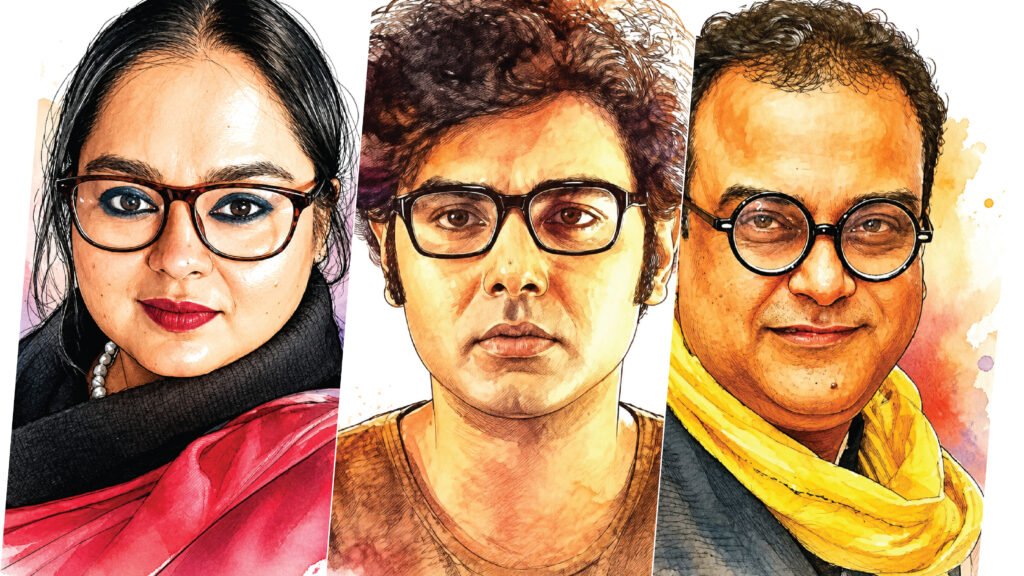

I want to remain with Nandikar until the day I die.
Not work, theatre is tradition for her. Sohini Sengupta speaks about second generation theatre.
Theatre shaped a large part of my growing up years.
My mother was not only academically brilliant; she was equally immersed in art and culture. She excelled at everything she did. She managed the household beautifully, cooked wonderfully, raised me with immense care, played the piano, and attended rehearsals with unwavering dedication. I still remember how she would walk every day from Vivekananda Road to Nandikar in Shyambazar and then walk back home. For her, it was a form of exercise. My father was similar. Until a few years ago, he preferred travelling by tram.
Theatre was always a part of my life. Books, films, music, and different forms of artistic practice were natural elements of our home. There were never any restrictions. I watched Tarkovsky when I was very young. I may not have understood much, but it was from home.
We never had a great deal of money. Yet whenever I wanted a book, my parents somehow found a way to buy it for me. Music, literature, cinema—these shaped my upbringing.
Most importantly, both my parents constantly asked me, “what is your opinion?”
Another influence was the environment at home. Ours was a small, three-room, eight-hundred-square-foot flat where my father still lives. Yet some of the greatest names in Indian theatre would visit regularly—Ratan Thiyam, Jabbar Patel, Habib Tanvir, Shriram Lagoo, Jamil Ahmed, among many others. Ratan Kaka often stayed with us. My mother would cook for him. She had a tiny stove of the Janata company where she used to cook.
Our home was always open. There would be rows of shoes outside the door because so many people were constantly coming and going. I grew up witnessing a kind of community living. It made me deeply interested in people. Therefore sharing has never been difficult for me. The only challenge was a lack of privacy. As a teenager , probably then I was in 9th or 10th grade, discovering myself and learning about love, I sometimes wondered why there were always so many people around.
I hardly had any tutors growing up. Apart from a brief period with a mathematics tutor and later some guidance in Bengali from Kaushik Ray Chowdhury, I was largely self-taught. That freedom helped me develop independent opinions.
At the same time, I enjoyed solitude. Whenever my parents were away, I liked being by myself. I wasn’t particularly mischievous; I would simply read, wander through my own thoughts, and inhabit my own little world. Even amidst crowds, I always carried an inner world of my own. I was a kind of loner person.
I never imagined that I would one day take responsibility for running the group. I only knew one thing: I would never leave it. My intention was always to serve the group, not take something from it. The reason is simple. During some of the most difficult periods of my life, theatre saved me. When I struggled emotionally, when life became overwhelming, it was my group which kept me alive. By group, I do not mean any particular individual. I mean that inner creative force, the feeling of power and purpose I experience when I perform. That has always kept me positive.
It is the joy that comes from creating something, from acting, from making art. Theatre has kept me healthy in spirit. Because theatre has given me so much, I want more people to experience that same joy.
Even today, I have never gone to anyone asking for a role. I have never said, “Please give me a role.” I have always remained immersed in practice, in creating new work, imagining new possibilities, and participating in the creative process and ideation. Because of that, I never felt deprived. I never thought, “That person got something and I didn’t.”
I have never been consumed by thoughts of what I might be missing out on. Even now, if I perform well and people appreciate my work, it fills me with joy. I love receiving affection and encouragement from them.But becoming a famous star was never a dream of mine. I consider myself fortunate because I have always had a creative pursuit in my life.
Leadership came naturally. As others became occupied with different responsibilities, as my mother passed away, as my father grew older, and as many senior members started their own groups, I remained where I was. I never thought of leaving Nandikar.
I want to remain with Nandikar until my last day.
Perhaps in this regard I resemble my father. You can take everything else away from me, but you cannot separate Nandikar from my identity. I mean I plan something after life. My father often told me, “Do you know what Nandikar means? It means those who perform good and meaningful work.”
What is that auspicious work?
It is the joy that comes from creating something, from acting, from making art. Theatre has kept me healthy in spirit. Because theatre has given me so much, I want more people to experience that same joy. Everyone deserves a good time. That is why I want to continue doing theatre. Today, I feel people are becoming increasingly lonely. Everyone is constantly looking at their phones. Many young people arrive carrying immense loneliness and depression. Their physical and mental well-being has often been challenged from a very young age. The loneliness I see among young people today is heartbreaking.
Which is precisely why theatre feels more necessary than ever. Theatre means people coming together. It means belonging. It means living fully while we are here.
Over the years, one thing has become very clear to me. I am an intensely emotional person. I love loving people. I love being loved. For me, love is the only real magic. If you give me love, you can make me do almost anything. Perhaps this has sometimes caused me difficulties, but ultimately it has brought me immense happiness. I have always enjoyed trusting people. I have always enjoyed loving people. That is why I belong to a theatre group.
The circumstances today are very different from those of my parents’ generation. Living was affordable .Life was simpler then. Expectations were fewer. On Sundays, we might have eggs or a special fish dish at home. The rest of the week was mostly vegetarian food. Today, abundance surrounds us everywhere.
And realistically, you cannot ask people to deny themselves anything. People’s lifestyles, ambitions, and financial aspirations have changed. So our approach has changed too. I encourage everyone in the group to have jobs or alternate sources of income in other media. If they can earn a living elsewhere, they can participate in theatre more joyfully and sustainably. Most members of our group work regular jobs. They come to the group with whatever time they have left. It requires hard work, but it is possible.
The truth is that theatre in our country has never been economically self-reliant. In that case an allowance has been made. Yet those who truly love it stay. I have seen people remain committed for ten or fifteen years while balancing careers and personal responsibilities. In the end, those who genuinely love theatre remain. Theatre has always been relevant. It is relevant today, and it will remain relevant tomorrow.
In the age of artificial intelligence and increasing digitalisation, theatre offers something irreplaceable: the experience of the here and now. Watching a living, breathing actor perform in front of you is a unique human experience. The future of theatre may be more niche, but I believe that the future is incredibly exciting. I am generally an optimistic person. Whatever changes come, I believe in continuing the fight. People often predict the death of one medium or another. Some say cinema will disappear and only streaming platforms will survive. Others claim streaming itself will eventually vanish. Similar predictions are constantly made about television and mega serials. Entertainment will continue to evolve. It is a continuous process of changing.
At Nandikar, the plays however strive for something that is not merely contemporary but genuinely modern—work that remains meaningful ten or fifteen years later. That is what interests me. When I stage Brecht, I feel Brecht remains essential. Future generations should learn those techniques and ideas. Similarly, not knowing Shakespeare would be a loss. Not engaging with Rabindranath Tagore’s texts would also be a loss too.
Good texts endure. So does good acting. The real question people often ask is: What did I gain from this? What is the financial benefit ? The answers differ from one to another. For me, the answer lies in the work itself. I want to act well. I want to work hard alongside others. Whether the material is original, humorous, classical, or contemporary, I want to explore it in a fresh way.
On Sundays, we might have eggs or a special fish dish at home. The rest of the week was mostly vegetarian food. Today, abundance surrounds us everywhere.
What keeps bringing me back to the stage is my own inner strength. When I perform a big role before a live audience, when they experience joy and I experience joy along with me, that is enough. Theatre constantly tests me with my own self. It tells me, very honestly, what I can do and what I cannot. Theatre never compromises.
The continuous self introspection and self judgement is something which draws me back to the theatre every time. I also deeply admire the people around me who work for years without constantly asking or even thinking what they will receive in return. Life does not always follow the equation that if you give five coins, you will receive five coins in return. It doesn’t work that way. What I love is that spirit of working selflessly—that passion. For this, human connection and connection with my own self , that I continue to return to theatre everything, happily.
In film and television, especially now that I am a mature actor, I often receive a certain amount of pampering. Someone does my hair neatly. Someone applies my make-up. Someone prepares the set. Someone offers me tea. Theatre is completely different. In theatre, I do everything myself. I iron my costumes from home. I prepare for my role. I help with lights. I help set up the stage. I do my own make-up. I check ticket sales. I absolutely love that feeling of managing so many things with proper affection.
There I am not counting on if my father is pampering me or not . I have successfully suppressed that greed from me. The wholesomeness belongs on being able to do a good theatre. While doing theatre , all these become like a fun play with self. For many years I taught professionally, later I resigned. I performed well academically and thought to secure a stable job alongside doing theatre. I consciously chose work that would allow me to finish by four-thirty in the afternoon so that I could dedicate the rest of my day to theatre. But as I grew older, I realised that acting was the only thing I truly loved. I loved studying acting, thinking about acting, discussing acting and everything about acting. Eventually, I decided that it is high time and I should commit fully to what I wanted most and try to earn my living from it. That decision required a leap of faith.
Aparna Sen casted me in Paromitar Ek Din. The film earned me an international award. More opportunities followed. I continued to work in cinemas. Some got me recognitions and awards.
It is certainly not like that I worked in other medias in order to smoothen my way for theatre. Alike theatre, working on other media were too a ‘just by chance’ thing. Interestingly, I never entered theatre with a grand plan. My original ambition was to study abroad, pursue higher education, and perhaps become a professor. My teachers expected that path for me as well. Theatre happened by accident. ‘by chance’. Someone was supposed to perform a role but dropped out at the last minute. My father asked me, “Could you memorise the lines and do one show?”
I could never come back from that one show. The joy was so overwhelming that I kept doing that. Theatre became a process of self-discovery—discovering my body, my mind, and my potential. Any fine art is like a vast sea and that gave me immense pleasure. It brought together everything I had learned and everything I was. My intellect, knowledge and everything. For the first time, I felt powerful. I felt that I mattered. From there, the journey continued.
Aparna Sen casted me in Paromitar Ek Din. The film earned me an international award. More opportunities followed. I continued to work in cinemas. Some got me recognitions and awards. I gradually understood the unique language of each medium. Later while doing Thakumar jhuli, khorkuto in television, that filled me with joy too.
What I love most about television is watching people come together , giving so much efforts to create something. On a set, dozens of people run around all day to capture a single shot. I find that beautiful. Every morning I wake up and think: What is my profession? I am an actor. And that thought fills me with joy instantly. I believe that I am incredibly privileged to earn a living doing what I love. Few people get that opportunity.
Whether it is theatre, film, television , I love it all. I also enjoy teaching young actors so that they can also experience the real happiness as I do. I enjoy every part of it. In truth, these opportunities have not made life easier. Most days I shoot throughout the day and rehearse through the night. It is exhausting.But it is a joyful exhaustion.
One day I will die.That is inevitable. But I hope I die having done meaningful work. I do not want to sit idle and simply wait for life to pass. I want to keep creating until the end. I have seen many senior actors continue working tirelessly across theatre, film, and television. I have enormous respect for them. Some of them really love this thing. I really admire that and I like less talk and more work.
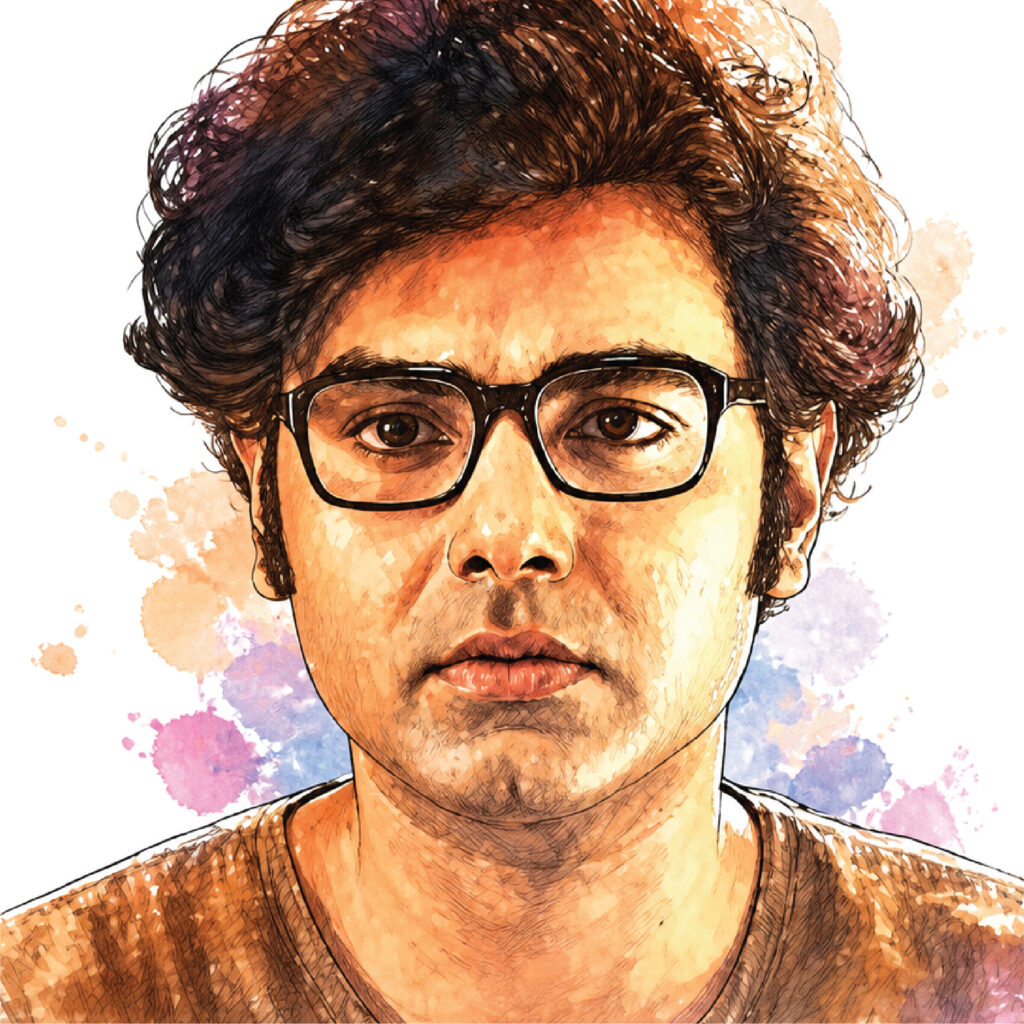
Without love, responsibility becomes a burden
Theatre is love for him. Arna Mukhopadhyay talks about his love and responsibilities of theatre
One of the biggest reasons I entered theatre and remained connected to it is that I grew up in a theatre family. It is not as though I was passionately fond of theatre from childhood or regularly watched plays. But my parents would often take me along to rehearsals, where I would sit quietly and observe. To be honest, I did not always find those rehearsals particularly entertaining.
As I grew older, however, I began acting in small children’s roles whenever the troupe needed someone. My school also had a drama club. Somewhere along the way, while acting and participating, a deep love for theatre quietly took root within me. I cannot pinpoint exactly when it happened.
The experience of witnessing the acting of stalwarts of Bengali theatre: such as Bibhas Chakraborty, Meghnad Bhattacharya, and Dwijen Bandyopadhyay at close quarters has left a profound impact on my life.
There is one memory that stands out. The theatre group Natyadha, where I trained and grew up as an artist, staged a production called Mahabharata I in 2002. Nearly fifty actors performed in it. Watching legendary figures of Bengali theatre such as Bibhas Chakraborty, Meghnad Bhattacharya, and Dwijen Bandyopadhyay from close quarters left an indelible impression on me.
My relationship with theatre is fundamentally one of love. Any sense of responsibility I feel comes from that love. Without love, responsibility becomes a burden.
At home, the “theatre mode” was never switched off. I never saw my parents spending more time discussing business matters or worldly concerns. Conversations after rehearsals revolved around theatre. Members of the troupe constantly visited our home. Discussions, debates, and reflections on theatre filled our everyday lives. All of this seeped into my subconscious without my realisation.
That is why I do not claim much personal credit for becoming who I am. Most of the credit belongs to my parents and the rich cultural atmosphere that surrounded me while growing up.
My relationship with theatre is fundamentally one of love. Any sense of responsibility I feel comes from that love. Without love, responsibility becomes a burden. I have never regarded theatre as an obligation. As long as this love survives, I will continue doing theatre.
I have never felt compelled to take my theatre group to greater heights or prove something extraordinary in life. My father never insisted that I must work only with his troupe or that I must pursue theatre at all. There were periods when I spent years acting without any desire to direct. Then, when the urge returned, I directed again.
I have never carried the weight of proving myself or taking my group somewhere significant. I love theatre, and I love the people who make theatre possible. In fact, a theatre group is merely a name. What I truly love are the people within it.
The woman who became my life partner and the mother of my child is an actress from that very theatre collective. The young men and women of my troupe are like family to me—often even closer than family. This sense of affection and belonging is spread throughout my theatrical life. That is why I continue to do theatre today—not because I feel responsible for changing society or carrying some grand burden on my shoulders.
And who am I to keep theatre relevant?
OTT platforms have arrived. Thirty-second reels dominate attention spans. New technologies will continue to emerge. Perhaps one day, simply wearing a pair of glasses will be enough to watch a film.
But theatre is a live art form that has endured for thousands of years. It has survived every transformation and every technological revolution. In that context, who is Arna Mukhopadhyay to claim he can save theatre?
For almost five and a half millennia, theater has endured on its own. In contrast, cinema is a mere child of hundred and fifty , and it already runs out of breath.
I possess no divine power to keep theatre relevant. Rather, through theatre, I will try to keep myself relevant. Theatre itself faces no existential challenge. Other mediums constantly struggle to reinvent themselves. Theatre survives on its own inherent strength, and it will continue to survive.
I have always wanted to act in films as well. Yet, even today, if you ask me honestly, I would say that acting in theatre gives me greater joy. At the same time, I have always wanted to make films while continuing my theatre journey.
Although I have been acting in films since Jouboner Upobon in 2017, my foundation lies in a long and sustained engagement with theatre. I do not harbour grand ambitions about cinema, just as I do not carry grand ambitions about theatre. However, cinema can offer a certain degree of mental and financial security. It is my primary profession.
Theatre is not my profession.
And yet, beyond the demands of a profession, I continue to nurture a dream—a desire to make films simply because I love the art of filmmaking.
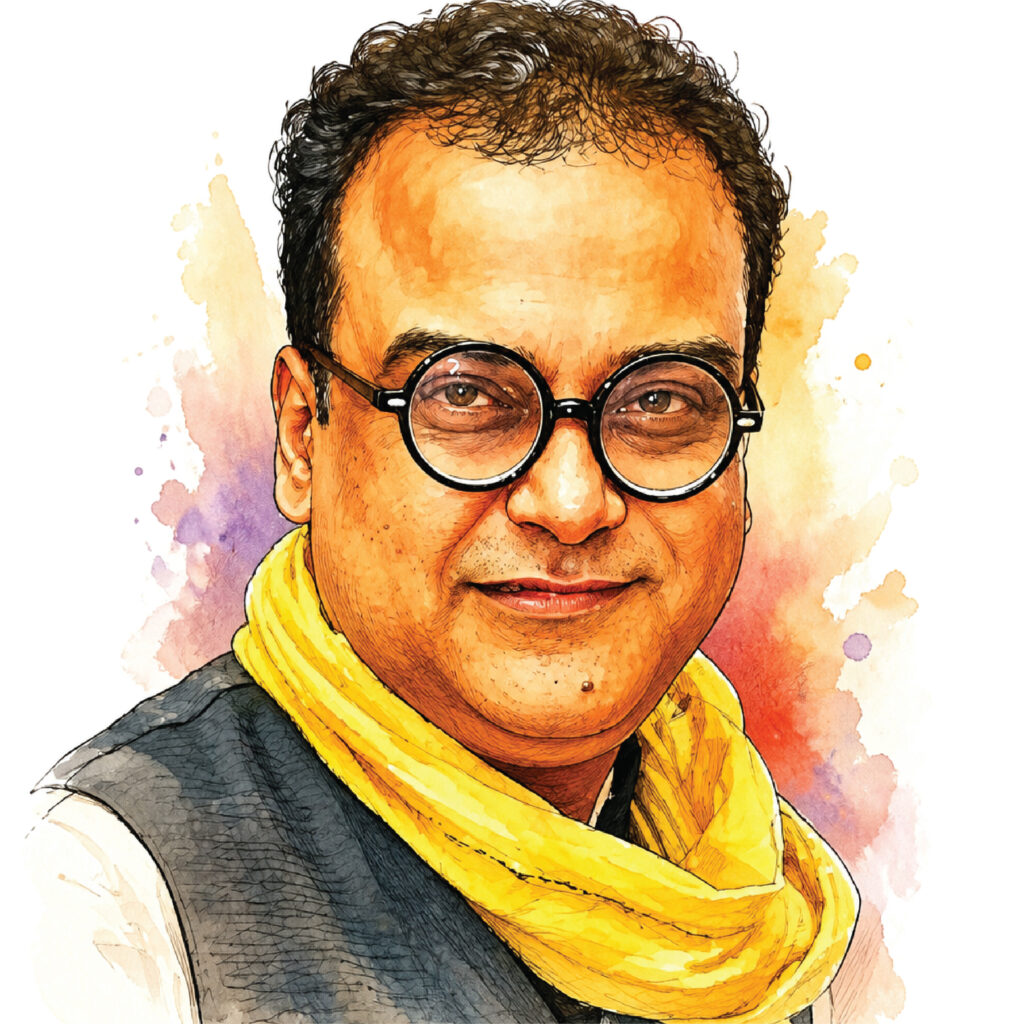
Chetana is a part of my heart
Loving theatre and falling in love with it was an automatic choice for him. Sujan Neel Mukhopadhyay talks about Chetana’s new chapter.
The influence of theatre on my life was almost inevitable. I grew up in a family of four—my parents, my elder brother, and me—but there was also an extended family called Chetana. I call it an extended family because the theatre group truly became one. That spirit of togetherness has always defined the way people approached theatre, and for me, the group became an inseparable part of my upbringing.
Interestingly, Chetana and I are almost the same age—the group is only two years older than me. When I was born, Chetana was at the peak of its creative journey. Marich Sangbad had already created a sensation in the theatre world, and Jagannath followed in 1977. I grew up right in the middle of that golden era.
As a child, whenever the group travelled for performances, my mother would go, and naturally, I would tag along. That led to an extraordinary experience: at the age of five, I travelled to the United States and made my first appearance on stage there. It was a tiny role involving a song, but it marked my introduction to performance. Before I even realized it, theatre had become woven into every aspect of my life.
As I grew older, I began forming my own opinions and creative sensibilities—through theatre, education, and life experiences. Loving theatre and falling in love with it felt completely natural.
Of course, I could have chosen a different path later in life, but my love for acting became so intense that I simply could not walk away from it.
Growing up in a theatre household meant that conversations at home revolved around much more than theatre itself. Discussions would branch into music—both Western and Indian—painting, cinema, literature, and culture.
Theatre opened the door to a much wider artistic universe.
A turning point came when I was in Class Ten. I played a role in Kabir, a Bengali adaptation of ‘Bhisham Sahni’s’ ‘Kabira Khada Bazaar Mein’. The role lasted only eight to ten minutes and included three songs, but it received tremendous appreciation.
Being exposed to great films from an early age shaped my way of seeing the world. Eminent artists and intellectuals frequently visited our home. At that age, I may not have fully understood their significance, but I sensed something important: theatre was serious work. It demanded dedication, intelligence, discipline, and knowledge.
Two aspects of theatre fascinated me most—acting and direction. I was always drawn to acting and music. Since childhood, I had opportunities to step onto the stage, whether in small roles or ensemble performances.
A turning point came when I was in Class Ten. I played a role in Kabir, a Bengali adaptation of ‘Bhisham Sahni’s’ ‘Kabira Khada Bazaar Mein’. The role lasted only eight to ten minutes and included three songs, but it received tremendous appreciation. Reviews praised my performance, and audiences responded warmly. At that age, such encouragement can be transformative. It gave me confidence that I could truly act and perform on stage.
Soon, I began stepping beyond the confines of my family’s theatre circle. One of the most significant developments was my association with Anjan Dutt. While my father had introduced me to theatre, it was Anjan-da who first cast me in leading roles. Ironically, I had never played a lead in my father’s productions.
By then I was in Class Twelve. Anjan-da became one of the most important mentors in my life, though neither of us knew it at the time. In fact, it was my father who suggested it to me after watching his work, ” he works with youngsters, you work with him”.
Around the same period, I also worked in ‘Care Korina’, directed by Jayati Basu. The production became a massive success, and I found myself playing lead roles in two popular productions simultaneously. Audiences embraced both performances.
Around the same period, I also worked in ‘Care Korina’, directed by Jayati Basu. The production became a massive success, and I found myself playing lead roles in two popular productions simultaneously. Audiences embraced both performances.
Not long after, I made my way into cinema and had the opportunity to act alongside Om Puri. Gradually, I began earning through acting and realized that acting could be more than a passion—it could be a profession.
The foundation of all this was my involvement with theatre. And by theatre, I do not simply mean acting on stage. It also meant watching rehearsals, observing the process, and learning from within a theatre group. My education came from spending years with the group and observing its workings in my own way.
My father never sat me down and taught me theatre step by step. Yet he remains my unspoken guru. I grew up watching him work. Later, Anjan Dutt played a crucial role in shaping me as an actor.
This is how my journey in theatre began and how I eventually became a professional performer.
If we fast-forward to 2015, a new chapter emerges.
For various reasons, Chetana had reached a standstill. New productions had stopped. At that moment, another side of me surfaced—the organizer.
The group needed rebuilding. But organization alone was not enough; it also needed a director. That necessity led me to direct Ghashiram Kotwal for Chetana in 2016.
From 2016 to 2026, ten years have passed. During this period, I have continued working as a director, largely to help Chetana survive. I had grown up with this group; it could not simply be allowed to disappear. It was from that place that my journey as a director began.
Before that, I had directed films. I had also directed theatre productions at Jadavpur University. Shiboprosad acted in one of those productions. In fact, we revived that same play, Bhul Rasta, in 2025.
Ironically, I had never aspired to be a director. I always wanted to be an actor. Before me, Chetana had been shaped by towering figures like Arun Mukhopadhyay and later Suman Mukhopadhyay. My journey into directing emerged from a difficult period in the group’s history.
If there is no risk in art, then it is not really art. That may sound like a cliché, but Ghashiram Kotwal was a huge musical, involving a completely new cast of young actors and based on a celebrated Marathi play with a powerful legacy. Staging it and finding a way to make it our own was a challenge. Today I look back on it with satisfaction, but at the time I was deeply frightened.
That is how I entered direction in 2016. Chetana is a part of my heart. It is from that place that my journey as a director began. People started embracing this new phase of Chetana. Since then, I have directed ten productions for the group, most recently Meghe Dhaka Ghatak. Alongside this journey, of course, there have also been my experiences in television, cinema and, today, OTT platforms.
However, theatre remains the space where I can create independently. I can do that both as an actor and as a director. No one can stop me there. Of course, money is required, and I have to figure out how to arrange it. But if I hold any ideology, any thoughts about people or society, theatre is the medium through which I want to express them. Through any production I create, I want to communicate those ideas. I will not find that freedom anywhere else.
When I am acting, I have to say what the character or the project demands. But theatre is entirely different. At the same time, I have been able to remain involved with theatre for so many years because of my work in other media. Theatre alone cannot provide my livelihood. Therefore, I have to work in other mediums as well.
If I could devote twenty-four hours a day entirely to theatre, nothing would make me happier. But that is not possible for me, and I understood that long ago. If someone else can manage it, that is wonderful.
There is another aspect as well. The rehearsal process and workshops in theatre constantly break me apart and rebuild me. I keep dismantling and reconstructing myself. One day I am working on Ritwik Ghatak, the next day I am playing a thief, and the day after that, a completely different character. This continuous inner process of exploration and transformation is something I carry into my work in films and television.
Today, people can watch OTT platforms, television and large-scale entertainment from the comfort of their homes. But the practice of watching theatre is different. There is a unique experience in sitting before a live performance. Theatre can evoke many emotions—protest, anger, joy, reflection. Those feelings stay with audiences because theatre speaks not only through entertainment but also through history, contemporary issues and questions that encourage people to think. Almost every play contains some element of that. Yet it never interferes with the entertainment value.
In today’s digital age, people’s eyes have changed. Their visual landscape has changed. Their ears have changed. The soundscape has changed. I believe theatre must take these changes into account. The way people see the world today is not the same as it was in the 1970s. Politics has changed, literature has changed, music has changed.
Theatre continues to make people think and question. It does so through entertainment and through content. That is where its strength lies. Watching a live performance, seeing a favourite actor perform in person—there is a unique attraction in that. Watching someone like Nasiruddin Shah perform live has its own appeal. At the same time, there is also a special excitement in watching young actors perform, because it is through the strength of their performances that new generations of actors emerge.
Theatre is a place where actors sharpen their skills, refine themselves and establish their identities. Above all, I would say that theatre is a place of learning.
Challenges to theatre have always existed. Cinema is undoubtedly a more powerful medium. Even Ritwik Ghatak left theatre for cinema. He famously said, “I want to reach more people.”
Yet theatre has survived with its own traditions, aesthetics, flavour and spirit. There is nothing synthetic about theatre. Its live, raw quality attracted people then and continues to attract them now. The strength and pull of theatre will always remain, no matter how attractive digital media becomes.
The most important thing is that today theatre itself is making use of digital media. Digital technology is becoming intertwined with theatre. To deny that reality would be foolish.