
The Street Where Dreams Perform: Broadway and the Making of Modern Theatre
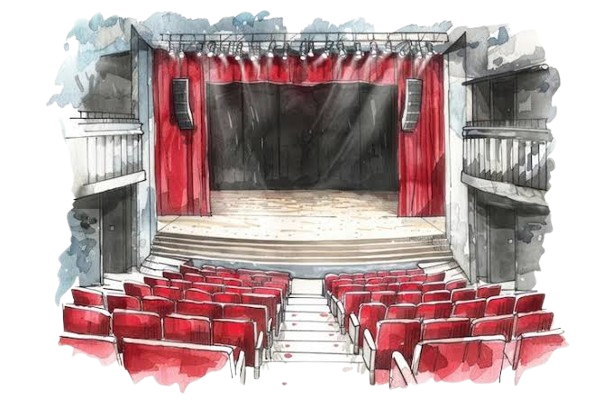
"A marquee lights up the night. The orchestra begins its overture. The curtain rises, and for the next few hours, an audience is transported into another world. Welcome to Broadway - the stage that has become synonymous with theatrical ambition, artistic excellence, and the magic of live performance."
For many theatre artists around the world, Broadway is more than a location. It is an aspiration, a symbol, and a cultural phenomenon. Whether one is a playwright in London, an actor in Kolkata, a composer in Tokyo, or a director in Johannesburg, the word "Broadway" evokes a shared image: grand theatres, celebrated productions, standing ovations, and the possibility that a single performance might change the course of theatrical history.
Over the past century, Broadway has become one of the most influential theatrical ecosystems in the world. It has produced legendary plays and musicals, launched the careers of countless artists, and shaped the way modern audiences think about theatre itself.
Yet Broadway's story is not merely one of glamour and commercial success. It is also a story of innovation, risk-taking, cultural change, and the enduring power of live storytelling.
From a Street to a Symbol
Broadway takes its name from the famous avenue that cuts diagonally through the grid of Manhattan in New York City. While the street itself stretches far beyond the theatre district, the term "Broadway" specifically refers to the professional theatres located around Times Square and the surrounding neighborhoods.
The roots of New York theatre can be traced to the eighteenth and nineteenth centuries, when touring companies and local performers staged productions in increasingly sophisticated venues. By the late nineteenth century, advances in transportation, urbanization, and entertainment culture had transformed New York into the theatrical capital of the United States.
As theatres clustered around Times Square, Broadway gradually evolved from a geographic location into a cultural institution.
Today, a production is generally considered a Broadway show when it is performed in one of the district's professional theatres, most of which contain more than 500 seats.
Yet Broadway's influence extends far beyond those buildings. It has become a global benchmark for theatrical excellence.
The Rise of the Broadway Musical
Although Broadway stages have hosted every kind of performance imaginable, it is the musical that has become its defining art form.
The Broadway musical emerged from a blend of operetta, vaudeville, minstrel shows, burlesque, and European theatrical traditions. Early productions emphasized spectacle and entertainment, but over time artists began to integrate music, story, and character more closely.
A turning point arrived in 1943 with the premiere of the groundbreaking musical Oklahoma!. Created by Richard Rodgers and Oscar Hammerstein II, the production demonstrated that songs, dialogue, and dance could function as a unified dramatic experience rather than separate attractions.
The modern Broadway musical was born.
From that moment onward, Broadway became a laboratory for new forms of storytelling where music and drama worked together to create powerful emotional experiences.
Legends of the Broadway Stage
Broadway's history is populated by extraordinary artists whose work has shaped theatre around the globe.
Playwrights such as Tennessee Williams, Arthur Miller, and Neil Simon brought complex human stories to the stage, exploring themes of family, ambition, morality, and social change.
Composers and lyricists such as Stephen Sondheim expanded the artistic possibilities of musical theatre, proving that Broadway could address sophisticated psychological and philosophical themes while remaining entertaining.
Producers, directors, choreographers, designers, and performers each contributed to Broadway's reputation as a collaborative art form where many talents unite to create a single theatrical event.
The Broadway stage has also launched the careers of performers who later became international stars, demonstrating the continuing importance of theatre as a training ground for artistic excellence.
The Spectacle of the Musical
One reason Broadway captures the public imagination is its capacity for spectacle.
Modern productions combine acting, music, choreography, lighting, scenic design, sound engineering, automation, and digital technology on a remarkable scale.
A Broadway audience may witness a chandelier crashing from a ceiling, a helicopter landing on stage, performers flying above the audience, or entire cityscapes appearing and disappearing within seconds.
Yet the most successful productions understand that spectacle alone is not enough.
The true power of Broadway lies in its ability to combine technical mastery with compelling storytelling. Audiences remember the visual grandeur, but they return because of the characters, emotions, and ideas that resonate long after the curtain falls.
Beyond Entertainment
Although Broadway is often associated with commercial success, it has also served as a platform for important social conversations.
Throughout its history, Broadway productions have addressed issues of race, immigration, gender, politics, inequality, war, identity, and social justice.
Musicals and plays have reflected changing cultural attitudes while also challenging audiences to reconsider their assumptions.
Theatre's unique ability to place human stories directly before a live audience has made Broadway an influential participant in broader cultural debates.
In this sense, Broadway continues a tradition that stretches back to ancient Greece: using performance not only to entertain but also to provoke reflection and dialogue.
The Tony Awards: Theatre's Biggest Night
Every theatrical culture develops its own rituals of recognition. For Broadway, that celebration is the Tony Awards.
Established in 1947, the Tony Awards honor achievements in acting, directing, writing, design, choreography, and production. Winning a Tony can transform a show's fortunes and significantly influence an artist's career.
For theatre professionals, the ceremony represents not only competition but also a collective celebration of artistic achievement and theatrical craftsmanship.
It serves as a reminder that Broadway is sustained by thousands of individuals working both onstage and behind the scenes.
The Broadway Audience
One of Broadway's greatest strengths is its ability to attract remarkably diverse audiences.
Tourists visit New York specifically to experience a Broadway show. Theatre students study productions as part of their education. Families attend beloved classics. Dedicated enthusiasts return repeatedly to see new interpretations and emerging works.
Broadway productions often become cultural landmarks, generating cast recordings, film adaptations, international tours, and educational programs that extend their reach far beyond New York.
In this way, Broadway functions not merely as a local theatre district but as a global cultural exporter.
Broadway in the Twenty-First Century
The twenty-first century has brought both challenges and opportunities.
Digital entertainment, streaming platforms, changing audience habits, and economic pressures have forced Broadway to adapt. At the same time, advances in technology have expanded creative possibilities.
Recent productions have embraced diverse stories, innovative staging techniques, and new musical styles. Contemporary Broadway increasingly reflects a broader range of voices and experiences than ever before.
The district has also become more international, drawing artists, investors, and audiences from across the globe.
Even in an age of digital media, Broadway continues to demonstrate the unique value of live performance - the irreplaceable experience of artists and audiences sharing the same space at the same moment.
Why Broadway Matters
Broadway's significance extends beyond its commercial success or cultural prestige.
It represents a belief in theatre as a living art form capable of evolving with society while preserving its essential human connection. Broadway demonstrates that stories told in a darkened theatre can still move audiences, spark conversations, and create lasting memories.
In an era dominated by screens, Broadway reminds us of something fundamental: there is still extraordinary power in gathering together to witness a story unfold before our eyes.
The lights may dim. The orchestra may begin. The curtain may rise.
But what truly defines Broadway is not its theatres or its marquees. It is the enduring relationship between performers and audiences—a relationship built on imagination, emotion, and the shared experience of live storytelling.
For more than a century, Broadway has transformed a section of New York into one of the world's most celebrated theatrical destinations. And as long as people continue to dream, sing, laugh, and tell stories, the street where dreams perform will remain alive.